Naming Big Feelings With Little Foodies

Here’s a thing I’ve noticed about small kids, and it took me a long time to see it clearly:
They are not confused about what they feel.
They are overwhelmed by it.
That’s a different problem entirely. And most of the language we use with little kids — be nice, use your words, calm down, stop crying — is built for the first problem. It assumes the kid doesn’t understand. So we explain. Or correct. Or redirect.
But the kid usually understands just fine. They’re just drowning in it.
What they actually need is the one thing we almost never hand them: a word for it.
What little kids are actually missing
If you slow down a tantrum — I mean really slow it down, the way you’d slow down a video — what you’ll see is almost never anger. It’s usually three feelings stacked on top of each other that the kid doesn’t have names for yet.
Disappointment and embarrassment. Jealousy and love. Excitement and fear. All in the same little body at the same time.
Adults do the same thing, by the way. We just get better at hiding it.
What children are missing isn’t emotional maturity. It’s three small, quiet things:
- Language — the word that matches the feeling
- A framework — permission to feel more than one thing at a time
- Safe reflection — someone who says yes, that’s a real feeling, it makes sense
That’s it. That’s the whole emotional vocabulary gap.
Why food (and why characters)
This is where I get asked the most questions. Why food? Why not just — I don’t know — animals, like everyone else?
Because food isn’t neutral. It’s loaded.
Food is comfort, culture, routine, identity, memory. Kids know it before they know most other things. They’ve been seeing it on plates, in fridges, in the hands of people they love, since before they had words.
When you turn food into characters — a scone with feelings, a piece of brie who’s a little jealous, a peanut butter and jelly sandwich navigating siblinghood — something quiet happens in a small kid’s brain:
It stops being about them.
And paradoxically, that’s exactly when they can start to see themselves in it. The distance is what makes the door open.
A kid who would never tell you they feel left out will happily tell you that Joan the Scone felt left out. And then, five minutes later, they’ll say it was a little bit like them.
That’s not a trick. That’s how small kids process. They meet truth sideways before they meet it head-on.
How to read these books out loud (the trick is not trying)
The best read-aloud advice I’ve ever been given is this:
Don’t perform. Don’t explain. Don’t turn the last page into a lesson.
Just read it the way you’d read a letter from a friend. Pause when something feels true. Let the kid interrupt. Let the silence sit.
A few small things that work, if you want them:
- After a feeling-heavy page, try “have you ever felt like that?” If they say no, believe them and move on. They’ll come back to it another time.
- When a character has two feelings at once, say them both out loud. “Joan is a little proud and a little scared.” That phrasing matters. The and is the whole thing.
- If your kid wants the same page five times, that’s not annoying. That’s them telling you which feeling they’re working on.
You don’t have to be a perfect parent or a trained educator for any of this. You just have to leave a little room.
Two things at once
If I could put one sentence in every children’s book in the world, it would be this:
Sometimes you love them. Sometimes you don’t. Sometimes you feel both — even when you won’t.
That’s not a bedtime rhyme. That’s a survival skill.
Because the kids who grow up believing they have to pick one feeling and stick with it are the same kids who grow into adults who can’t tell you what’s wrong — because nothing is wrong, and also everything is.
The work isn’t to teach kids what to feel. The work is to hand them the idea that whatever they’re feeling is allowed, nameable, and not a problem to fix.
Everything we make at TootieFoodie is a very small version of that handoff.
Where to start
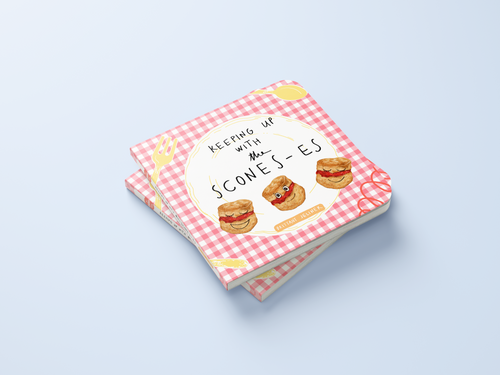
If you want a way in, Keeping Up With the Scones-es is a gentle entry point — a scone named Joan who can see all the other scones she could be, and has to learn how to feel about it. Kids get it. Parents often cry a little. Both are fine.
Read it. Don’t explain it. Just let it sit in the room for a minute after you close it.
If it’s doing its job, you won’t need to.
— Brittany